
The 7-Day Window (Why Late Spotters Lose Half Their Margin)
Most creators spot a trending bag two weeks after it peaked. By the time they post about it, their audience has already saved it from someone else's video. The window between “this is going to blow up” and “everyone has it” is shorter than 7 days — and the creators who learn to read it have a structural advantage that compounds with every drop.
Here's what that actually costs you.
A bag that's trending but not yet saturated: your audience hasn't seen it yet. You're the one who introduces it to them. You set the price. You own the conversation. You sell 20 units at $99 and walk away with $940.
The same bag, two weeks later, after three other creators posted it: your audience has already saved it six times from other accounts. They've seen it at $79, at $85, at $105. You're not the discovery anymore. You're the fifth person at the party. Conversion drops. You discount to compete. Margin compresses by half or more, based on our experience working with creators running this model. You're lucky to move 8 units.
Same bag. Same followers. Different timing. Completely different business.
Late spotters don't just earn less on a single drop. They train their audience to wait and see, which makes every future drop harder to open. The full breakdown of what a drop actually earns shows why timing is the variable most creators underestimate.
Timing isn't a soft skill. It's the difference.
The 4 Leading Indicators of a Trending Bag (Before TikTok Knows)
Forget the FYP. By the time a bag hits your For You Page with 2M views, you're already late. The signal was there 5–7 days earlier, in places most creators aren't looking.
Here are the four that actually matter.
Signal 1: The “where is this from?” comment cluster. Not one comment. A cluster. When three or more people on the same video ask where a bag is from, and the creator hasn't answered, that bag has pull. The creator doesn't even know they're sitting on a product yet. You do.
Signal 2: The save rate on low-view content. A video with 4,000 views and 800 saves is a stronger signal than a video with 400,000 views and 6,000 saves. Save rate tells you intent. Views tell you reach. A niche creator's highly-saved bag content is an early indicator that the save behavior will scale when the video hits a bigger audience.
Signal 3: Cross-platform repetition. When the same silhouette shows up independently on TikTok, Instagram Reels, and Pinterest within a 72-hour window, with no obvious campaign behind it, that's organic convergence. Not manufactured. Not sponsored. Just a shape that's resonating across different audiences simultaneously.
Signal 4: The resale price spike. When a bag's resale listing price increases 20–40% above retail in a short window, secondary market buyers have already validated the demand. They're buying now because they believe the price will go higher. They're usually right.
Watch for all four. When three of them show up on the same silhouette in the same week, that's your window.
The 3 Bag Archetypes That Recur Every 18 Months
Trends feel random from the outside. They're not. The same three archetypes cycle through fashion every 18 months or so, each time wearing a different color or hardware detail.
Learn to recognize the archetype and you can spot the next iteration before it launches.
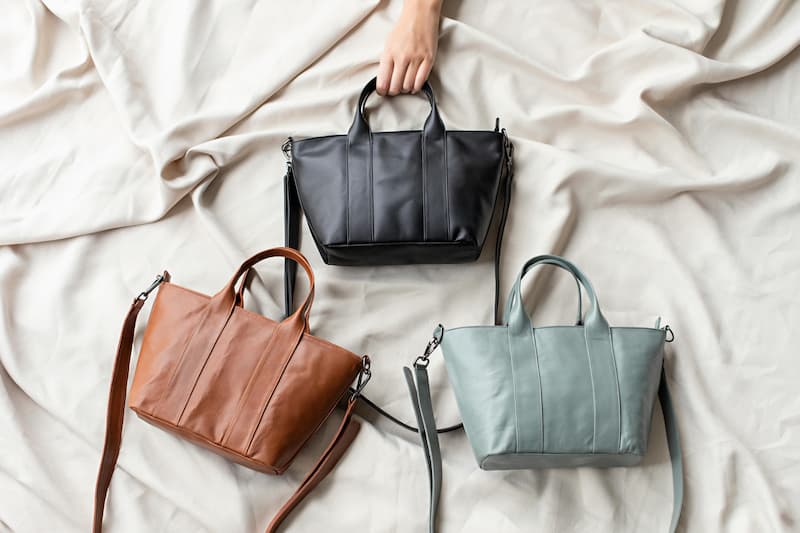
Archetype 1: The Dupe Candidate. A luxury house releases a bag that becomes culturally dominant. Quilted patterns, woven leather, sculpted silhouettes with recognizable hardware. Six to nine months later, the accessible market floods with versions of that silhouette, with the same structure, different branding. The dupe moment is predictable. The only question is which silhouette is currently dominant and when the window opens. Watch what's on the arms of people who can actually afford the original. That's your 6-month preview.
Archetype 2: The It-Girl Bag. A public figure carries a bag in three or more visible moments — a paparazzi shot, a red carpet, a street style photo. Within six months, that silhouette is everywhere. Not the exact bag. The archetype. The mini top-handle. The oversized tote. The micro crossbody. The shape, not the label, is what travels.
Archetype 3: The Anti-Luxury Bag. Canvas tote. Raffia. Intentionally simple. Sometimes intentionally ugly. This one comes around every 18 months or so, right when the fashion-aware audience gets bored of polish and craves something that feels real. It's a rebellion against the previous cycle. If the last 18 months were dominated by structured leather with gold hardware, the next wave will be unlined canvas with wooden handles. Cyclic. Predictable. Profitable if you read it right.
How to Track Signals Without Spending 4 Hours a Day Scrolling
OK so here's the thing most people get wrong about trend monitoring: they think it requires constant presence. It doesn't. It requires a system.
The creators who spot trends earliest aren't the ones who spend the most time on TikTok. They're the ones who've set up their feeds intentionally and know exactly what they're looking for when they show up.
Build a signal-specific feed. Create a separate account (or use your existing one with a dedicated session) that follows only three types of accounts: street style aggregators, fashion-adjacent creators in markets that trend 4–6 weeks ahead of the US (UK, Korea, Japan), and the comment sections of mid-size fashion creators (50K–200K). Not the mega-accounts. The ones right below them.
Schedule two 15-minute sessions a day. Morning: check saves and comments on content posted in the last 12 hours. Look for the clustering behavior. Evening: check cross-platform repetition. Same silhouette, different creators, same week. That's your signal.
Use your own DMs as a research tool. Your followers are telling you what they want. Every “where is this from?” is a data point. Every “can you find this?” is a pre-qualified buyer. Log them. Not in a complicated system. A notes app is fine. The pattern shows up fast.
30 minutes a day. That's the whole system. The rest is knowing what to do when the signal shows up.
From Signal to Action: The 24-Hour Decision Framework
You've spotted the signal. Three of the four indicators are showing up on the same silhouette. The “where is this from?” comments are clustering. The save rate is high. Now what?
You have about 24 hours before other creators in your niche catch the same signal. Here's how to use them.
Hour 0–4: Verify the signal. Is this one creator moment or genuine multi-source convergence? Check three platforms. If it's only on TikTok, wait. If it's crossing over to Instagram and Pinterest, move.
Hour 4–8: Submit to Find My Bag. Photo or link, that's all you need. You'll have a sourcing quote within 24 hours: price, quality notes, shipping timeline. You're not committing to anything yet. You're getting the number so you can make a real decision.
Hour 8–24: Plan the teaser. While the quote is coming in, draft your teaser content. One story. The bag. No price, no announcement. You're watching the DM response before you commit to the drop. The full mechanics of turning that signal into a pre-sell are in the pre-sell playbook, but the short version is: tease first, announce second, order third.
The creators who move in this sequence consistently outperform the ones who hesitate. Hesitation is just the 7-day window closing on you. Move.
Submit it to Find My Bag. Quote in 24 hours.
Photo or link. We source it, verify the quality, and get you a full quote before you commit to a single unit.
Find My Bag → Free to submit · Quote in 24h · Zero commitmentWhen to Ignore a Signal (False Positives Explained)
Not every signal is real. Some are manufactured. Some are one-creator moments that don't travel. Learning to filter is as valuable as learning to spot.
False positive 1: The paid placement. A bag shows up on three large accounts in the same 48 hours, all with similar caption language. That's a campaign, not organic convergence. Brands pay for synchronized posting. The audience sees through it faster than you think. These bags rarely sustain momentum past the campaign window. Skip it.
False positive 2: The one-creator spike. A creator with 2M followers posts a bag and their audience floods the comments. That's their audience responding to their taste — not broad market demand. If the same bag doesn't show up independently on smaller accounts in the following week, it's a one-creator moment. It won't travel the way a genuine trend does. Check for the independent convergence before you move.
False positive 3: The niche trend that doesn't cross over. Some bag trends are very specific to a subculture (dark academia, cottagecore, streetwear). They can sustain within that niche indefinitely without ever breaking into broader creator commerce. If your audience isn't in that niche, the signal isn't for you. Knowing your audience first is the filter you apply before any sourcing decision.
A real trend survives the false positive test. It shows up on multiple account sizes, on multiple platforms, with genuine audience response that isn't campaign-coordinated. That's when you move.
When a false positive slips through and you've already ordered: that's exactly what the lessons in the first bag drop mistakes guide are there for.
Conclusion
Spotting a trending bag early isn't luck. It's pattern recognition, a disciplined feed, and a 24-hour decision framework you run every time a signal shows up.
The 7-day window is real. It opens and closes whether you're paying attention or not. The creators who build consistent income from drops are the ones who've trained themselves to see it, and move before the window closes.
The bag is out there right now. Someone in your niche is about to post it. The question is whether you see it first.
Frequently Asked Questions
How early can I really spot a trending handbag before saturation?
The clearest signals appear 5–7 days before a bag hits mainstream saturation on TikTok. That window is created by cross-platform convergence, save rate spikes on low-view content, and “where is this from?” comment clustering. Creators who monitor these three signals consistently can spot the window before it opens to the broader market.
Do I need to follow Korean and Japanese fashion accounts to spot trends early?
Not mandatory, but useful. These markets tend to move 4–6 weeks ahead of US trend cycles for certain silhouettes, particularly structured leather goods and architectural shapes. If your audience skews toward fashion-forward aesthetics, building a small monitoring list from those markets gives you a legitimate preview window.
What's the difference between a trend signal and a one-creator moment?
A trend signal is independent convergence: the same silhouette showing up on multiple creators, across multiple platforms, without an obvious coordinated campaign behind it. A one-creator moment is a single large account driving response from their specific audience. The test is simple: does the bag show up independently on accounts that don't follow each other? If yes, it's a signal. If it's contained to one creator's ecosystem, it's their moment, not a market trend.
How much time per week do I need to invest in trend monitoring?
About 30 minutes a day, split into two 15-minute sessions. Morning for save rate and comment clustering on recent content. Evening for cross-platform repetition. The system matters more than the time. A focused 15 minutes with a well-curated feed outperforms 2 hours of unfocused scrolling every time.
What if I spot a bag too late and it's already saturated?
Pass on the drop. Trying to sell a saturated bag into an audience that's already seen it from three other creators is a margin and trust problem simultaneously. The better move is to use the saturated trend as a signal for what archetype is peaking, then look for the next iteration of that silhouette before it surfaces. Saturation isn't a dead end. It's data for the next window.
Should I source bags my favorite influencers wear, or bags my own audience asks about?
Your audience. Every time. Your favorite influencer's audience and your audience are different people with different budgets, aesthetics, and trust relationships. A bag that converts for a 5M-follower creator might not convert for your 20K audience. Your followers follow you, not them. The most reliable sourcing signal is always a “where is this from?” DM in your own inbox, not someone else's.