Every creator who stalls before their first bag drop asks the same question: "What if I order 50 units and no one buys?" Here is the answer the brands do not want you to know — you do not have to. The best creator brands sell every unit before a single one ships. This is how.
If you are not yet convinced that selling your own product beats affiliate links, read why TikTok creators who don't sell their own products won't survive first. This playbook picks up where that argument ends. And if you want the income math before you commit to the mechanics, our breakdown of what a 20K-follower creator actually earns reselling bags has the numbers.
Why Every Creator Who Fails Ordered Too Early
Picture this: a creator with 30K followers posts a bag. The comments explode — "where is this from?", "link?", "I need this." She takes it as a signal. She orders 80 units. They arrive three weeks later, stacked in her living room. She sells 14 in the first week. Then momentum dies. The other 66 units sit in boxes for six months, slowly converting confidence into dread.
This is not a story about a bad product. It is a story about confusing two very different things: interest and commitment.
Interest is cheap. When a follower comments "where is this from?" they are expressing curiosity, not pulling out their credit card. Commitment is rare, and the only way to separate one from the other is to ask for it before you spend a dollar on inventory.
This is what pre-selling does. It filters your warm audience into paying buyers in 72 hours. No inventory risk. No capital tied up. No boxes in the living room.
What Pre-Selling Actually Means (And What It Does Not)
Precision matters here — the word "pre-sell" gets misused in ways that will cost you money if you follow them.
Pre-selling IS: Announcing a product to your audience, collecting confirmed orders with payment upfront or a deposit, then sourcing only the exact quantity you have already sold.
Pre-selling is NOT a poll. "Would you buy this bag if I stocked it?" is not pre-selling. Polls measure intention signals, and intentions are not sales. The gap between "yes I would buy" and "here is my credit card" consistently runs between 60% and 90% in social commerce. A poll tells you nothing actionable.
Pre-selling is NOT crowdfunding. Kickstarter-style campaigns with reward tiers, stretch goals, and 30-day funding windows are too heavy for a creator bag drop. You are not funding a product development cycle. You are sourcing an existing trending bag for a specific group of buyers.
What you are building is a drop with limited quantity, announced to your audience, with payment collected before you place the order. Simple. Repeatable. Zero inventory risk.
The 7-Day Pre-Sell Timeline That Converts
Here is how the mechanics work, day by day.
Day 1 — Submit to Drop That Bag. You spot the bag on your own feed, in your comments, or in a viral TikTok from another creator. You upload the photo or paste the link at Find My Bag. Within 24 hours you receive a full quote: sourcing price, quality notes, shipping timeline. No commitment required.
Day 2 — The teaser. Post a story or short video showing the bag without announcing the drop. No price, no dates. Just the bag. Measure the organic response: saves, DMs, comments. If your audience is warm, they will tell you immediately.
Day 3 — The announcement. Official drop reveal. Price, date, limited quantity. Be specific: "I'm only running 25 units on this one." This is when urgency starts.
According to a 2024 YouGov survey cited by Shopify, 31% of consumers are more likely to buy fashion items that carry a limited-edition label. A separate 2025 PYMNTS and Scalefast survey of 2,298 US shoppers found that 43% had taken part in a limited-time product drop, flash sale, or private sale within the previous month. The behavior is already there. A fixed close date is your scarcity engine.
Days 4 to 5 — Pre-order window. A strict 48-hour window where followers can reserve and pay. Not "first come first served someday" — a real deadline with a real close date.
Day 6 — Order to Drop That Bag. You place the order for exactly the number of pre-orders collected. Not one unit more.
Day 7 onward — Drop That Bag sources and ships. Based on our sourcing network, typical delivery from order confirmation to product in hand runs 7 to 14 days depending on your location and the specific bag.
On minimums: if you collect fewer than 10 confirmed pre-orders, hold the drop. Issue refunds or extend the window. Ten units is the minimum viable drop. Below that, the economics do not justify the sourcing and logistics overhead. Between 10 and 25 units is a strong first drop. Above 25 signals you are ready to move faster on the next one.
How to Price Your Pre-Sell (The 3x Rule)
Pricing is where most first-time sellers leave money on the table, either by going too cheap and destroying their margin, or too expensive and killing conversion.
The baseline: your retail price should be at minimum 3x your sourcing cost.
For mid-range trending bags sourced in the $25 to $40 range (based on our current supplier network), most creators land their resale between $75 and $120 — a markup that holds margin while staying impulse-friendly for a 20K audience. Below $60 and the bag starts to feel like a dupe. Above $130 without an established brand and conversion rates drop sharply.
The pre-sell pricing move: offer a pre-order price $10 to $15 below your future retail. Be explicit about it: "Pre-order price: $79. Once the drop ships, retail goes to $94." This rewards early commitment and creates a legitimate urgency mechanism that does not feel manufactured.
Do not discount below your 3x floor. The margin exists to absorb occasional lost sales, payment processing fees, and the time you invest in running the drop. Protect it.
The Payment Stack That Does Not Lose You Sales
This is where many creators stall. They have warm buyers and no clean way to collect payment.
Option 1 — Stripe Payment Links (recommended for under 25 units). Create a payment link in under 20 minutes. No monthly fee. Professional checkout. Accepts all major cards. Send the link in a story, a bio, a DM. Based on the creators we work with, this is the leanest setup for a first pre-sell: zero monthly cost, works globally, requires no website.
Option 2 — Shopify Basic ($29/month). Gives you a real storefront, inventory management, and email collection. Worth it from drop 3 or 4 onwards when you need the infrastructure. Overkill for drop one.
Option 3 — DM plus bank transfer plus honor system. Works for hyperlocal audiences where you know your buyers personally. Caps at roughly 15 to 20 units before it becomes unmanageable. Too many friction points, too much manual follow-up.
One rule regardless of payment method: collect payment before you place the order with Drop That Bag. Pre-selling on a promise without payment is not pre-selling — it is a waitlist, and waitlists do not pay for inventory.
Submit the bag your audience is already asking about.
We quote within 24h — and creators who pre-sell properly close their first drop inside 48 hours of receiving the quote. No minimum order. No commission. No catalog.
Find My Bag → No account needed · Free to submit · Quote in 24hThe 5 Scripts That Convert Pre-Sells (Copy-Paste Ready)
These are the five moments where creators lose sales by saying the wrong thing — or nothing at all. Each script is under 80 words. Adapt to your voice, but keep the structure.
Script 1 — Teaser story (Day 2)
"So I found something. Not going to say what yet. But if you know, you know. Watch this space — something is dropping this week and I'm only doing a very small run. Save this if you want to be first."
Script 2 — Announce post (Day 3)
"Drop incoming. I've sourced [bag description] and I'm running exactly [X] units. Pre-order opens tomorrow, closes in 48 hours. Price is $[pre-order price] — goes up to $[retail price] after. No restocks after this run. Save this post so you don't miss the drop."
Script 3 — Mid-window urgency (Day 4, 24 hours remaining)
"24 hours left on the pre-order. [X] units claimed so far, [Y] left. After tomorrow it's gone. Link in bio — or DM me 'LINK' and I'll send it directly. This is the only run I'm doing of this one."
Script 4 — DM reply to "where can I buy?"
"Hey! I'm actually running a pre-order drop on this right now — closes [date]. Here's the link: [payment link]. Only [X] units left at the pre-order price of $[price]. Let me know if you have questions!"
Script 5 — Last-call story (Day 5, final 2 hours)
"LAST CALL. Pre-order closes in 2 hours. [X] units left. After this it is done — no restock. Link in bio, or DM me 'LAST' right now and I'll send it directly."
When to Graduate from Pre-Selling to Full Drops
Pre-selling is the training ground. It is not the destination.
After 3 successful pre-sells (15 or more units each): you have enough data to run a real drop, ordering a small buffer stock (10 to 15% above your pre-sell volume) to capture late buyers and DMs that come in after the close. This is when the model starts to feel like a business.
After 5 successful pre-sells: you know your audience. You know which silhouette they respond to, which price point converts, which content format drives the most pre-orders. This is the moment to move into OEM, producing 50 units under your own logo, your own colorway, your own packaging. Your pre-sell data tells you exactly what to manufacture. Read how to start your own handbag brand with OEM manufacturing for the full process.
Djerf Avenue, a widely studied example of creator-to-brand conversion, built its early drops on exactly this mechanic: limited runs, announced in advance, sold out on launch. Drops that generate purchase-intent signals — saves, shares, DMs — tend to perform well with TikTok and Instagram engagement patterns, in our experience working with creator drops. Each sold-out drop makes the next one more anticipated. The compounding is structural, not accidental.
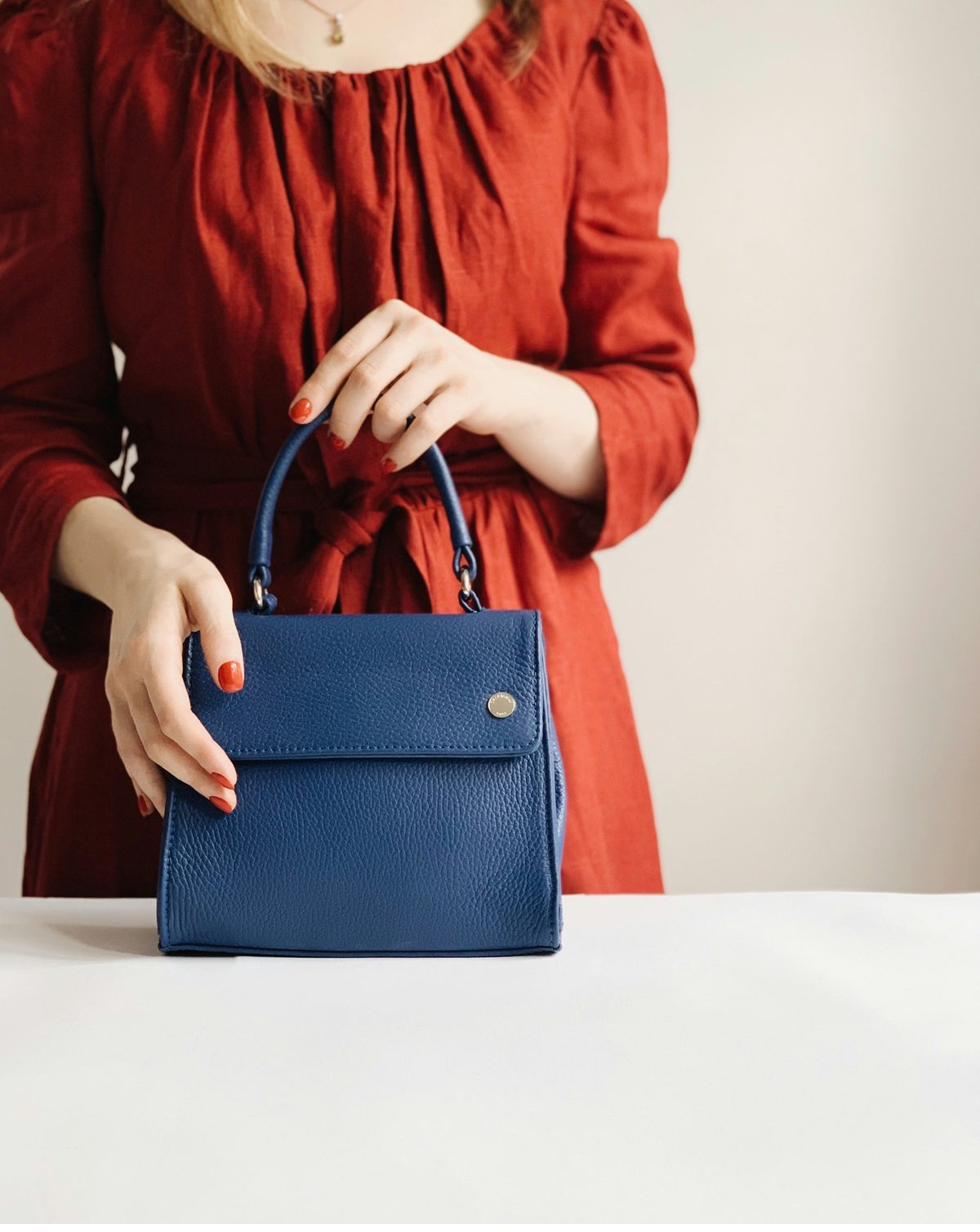
Pre-sell is brilliant training wheels. At some point, your audience does not want a trending bag you sourced — they want your bag. That is when the brand begins. When you are ready, Start Your Bag Brand handles the manufacturing.
Frequently Asked Questions
How long does a pre-sell campaign take from announcement to delivery?
From announcement to delivery typically runs 10 to 18 days. The pre-order window is 48 hours. Drop That Bag quotes within 24 hours of submission. Sourcing and shipping to your door typically takes 7 to 14 days from order confirmation, depending on your location and the specific bag.
What if I only get 5 pre-orders instead of my 20-unit goal?
Issue refunds and hold the drop. The minimum viable order based on our sourcing network is 10 units — below that, the economics do not justify the logistics. Frame it to your audience: "We did not hit the minimum for this run — I will relaunch it next week. Stay tuned." This builds anticipation rather than eroding trust.
Do I need a Shopify store to pre-sell my first bag drop?
No. A Stripe Payment Link takes under 20 minutes to create, has no monthly fee, and works as a checkout for any buyer globally. Shopify is useful from drop 3 or 4 onwards when you need proper inventory management and a storefront. For your first drop, a Stripe link sent via DM or posted in your bio is sufficient.
Can I pre-sell a bag before Drop That Bag sends me the quote?
We recommend against it. Pre-selling before receiving the quote means you may need to refund buyers if the sourcing cost changes your target margin. The correct sequence: submit on Day 1, receive the quote on Day 2, announce the drop on Day 3. The 24-hour quote window fits cleanly inside the 7-day timeline.
How do I handle refunds if a customer changes their mind during pre-sell?
Issue the refund promptly and reduce your order quantity accordingly. Because you only order after the pre-sell window closes, a refund request before your order date costs you nothing but a Stripe processing fee. Build a clear refund policy into your announce post: "Pre-orders are refundable until [date] — after that, the order is placed and all sales are final."
Is pre-selling legal for creators on TikTok and Instagram?
Yes. Pre-selling non-counterfeit goods is legal. You are collecting payment for a product that will be delivered — this is standard commerce. The key conditions: deliver within the timeline you promise, issue refunds if you cannot fulfill, and do not misrepresent the product. Drop That Bag verifies quality before shipping, which protects both you and your buyers.