The traditional wholesale handbag model was built for department stores. Six-month lead times, exclusive territories, and order minimums calibrated for chain-store inventory cycles, not for the boutique that wants to test something new every few weeks. Most independent retailers operate on the opposite math: small quantities, fast iteration, watching what customers actually pull off the rack. The supply chain was never designed for them — until it had to be.
If you run a boutique, a Shopify store, or a hybrid operation and you have ever passed on a trending bag because the supplier's minimum was larger than your budget or your confidence in the product, this article is for you.
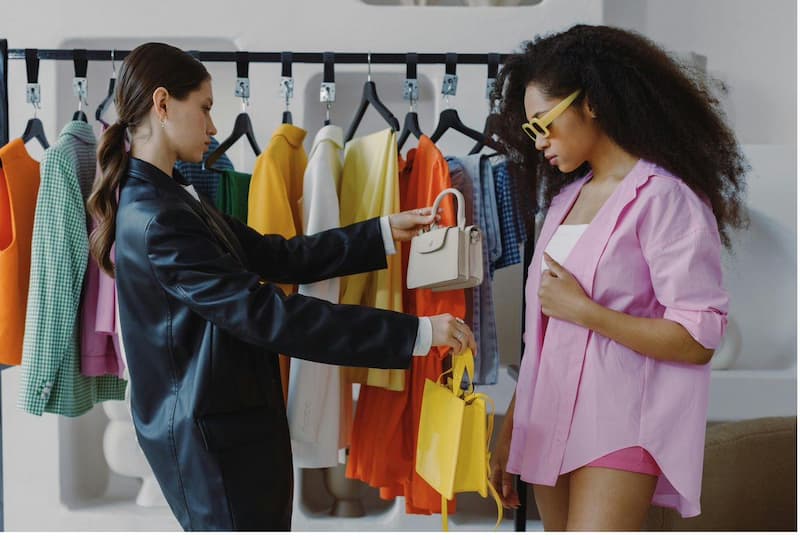
Why Wholesale Minimums Punish the Best Boutiques
The wholesale system was not designed to be cruel. It was designed for scale. And that is exactly the problem.
Wholesale minimums exist because suppliers built their economics around large, predictable orders. The lead times, the payment terms, the exclusive territory clauses. Every element of the traditional model assumes a buyer who orders once or twice a year, carries deep inventory, and distributes risk across dozens of SKUs. That model works for a department store with 200 locations and a six-figure open-to-buy budget. It works for chain buyers whose entire job is to place large, safe bets.
For an independent boutique, the math inverts. Small floor space demands curated assortments instead of broad catalogs. With limited cash, every order has to be a tested bet rather than a blind one. And a relationship-driven customer base rewards trust and curation more than variety and volume.
The boutique owner's core strength: her ability to identify what her specific customers will buy before anyone else does. This is structurally incompatible with a model that requires her to commit to large quantities six months before the product arrives.
The fashion industry produced an estimated 2.5 to 5 billion excess items in 2023, worth between $70 billion and $140 billion in unsold goods, according to the Business of Fashion and McKinsey's State of Fashion 2025 report. That number is not an accident. It is the predictable output of a wholesale system optimized for production scale and misaligned with actual retail demand. The boutiques carrying overstock at clearance prices did not misjudge their customers. They misjudged how much the wholesale system would force them to order above what their customers would actually buy.
The consequences compound. A boutique locked into four large wholesale suppliers carries the same four suppliers as every other boutique that went through the same trade shows. The independent retailer's differentiator (her taste, her curation, her relationship with her clientele) becomes invisible behind a wall of shared inventory. She cannot test a trending bag she saw on TikTok last week. She cannot pivot when the shape her customers want in March is different from what she ordered in October. The system punishes agility, and agility is the one structural advantage an independent retailer has over a chain.
The Curated-Drop Model: How Sharp Boutiques Are Bypassing Wholesale Entirely
Some of the most commercially effective independent fashion retailers have moved away from traditional wholesale, not toward larger assortments, but toward smaller, more deliberate ones.
The model is simple in principle. Instead of placing two large seasonal orders with established wholesale suppliers, these retailers source small batches of trending products, often 8 to 30 units at a time, refreshing their floor every four to six weeks. The inventory stays fast. The curation stays sharp. The markdown problem shrinks.
The commercial upside is significant. A wholesale bag that three boutiques in your neighborhood all carry gets compared and discounted. A bag your customers have seen nowhere else (a trending shape you spotted before your competitors, sourced in a limited quantity) commands full margin and generates urgency. Independent retailers who operate this way consistently report pricing power that wholesale-dependent peers cannot match, based on what we observe working with boutiques running this model.
Need Supply Co., the Richmond-based independent retailer that operated from 1996 to 2020, built its reputation almost entirely on this principle: source what is not yet everywhere, carry it before the mainstream, and exit the trend before it reaches department store clearance racks. The curation was the product. The same logic applies at a fraction of the scale.
Refreshing inventory on a faster cycle also has a secondary benefit that wholesale buyers rarely account for: it gives the boutique owner real-time data on what her customers actually want, updated every few weeks rather than twice a year. That data compounds. After six months of small-batch curated drops, she knows which shapes move, which price points hold, and which customer segment responds to which aesthetic. That is proprietary intelligence that no wholesale catalog can provide.

How No-Minimum Sourcing Works (Different from Wholesale, Different from Dropshipping)
The mechanics are straightforward.
Submit a bag (a photo, a TikTok link, a screenshot from a competitor's Instagram) on Find My Bag. Within 24 hours, you receive a quote: sourcing cost, quality notes, and a shipping timeline (typically one to two weeks for standard sourcing, based on our current supplier network).
Order any quantity that fits your strategy. Test a single unit on a hunch. Order 20 once your floor confirms interest. Restock 50 when the trend is established and you have customer data behind the decision. For larger volumes, pricing tiers reduce per-unit cost. Quality control is performed in-house before every shipment. You receive the inventory, own the retail relationship with your customers, and set your price.
This is structurally different from wholesale. No minimum order quantity. No exclusivity contracts that lock you into the same supplier as your competitors. No seasonal rollout calendar that forces you to commit six months before the product arrives.
It is also structurally different from dropshipping. With dropshipping, inventory ships directly from a supplier to your customer. You never touch it, which means you never control the customer experience, the packaging, or the quality at the point of delivery. With this model, inventory ships to you. You inspect it, present it, and sell it. The margin and the customer relationship are yours entirely.
The middle ground between wholesale rigidity and dropshipping detachment has been missing from independent retail for a long time. Boutique owners have been forced to choose between scale they cannot afford and control they cannot give up. That is the gap this model fills.

Submit it to Drop That Bag and we'll quote you within 24 hours.
No minimum order. Quality verified before it ships. You set the retail price and keep the margin.
Find My Bag Free to submit · Quote in 24h · Zero commitment requiredThe Hybrid Playbook: Physical Retail + E-Commerce + Pop-Ups
The boutique that runs physical retail, an online store, and occasional pop-up events has a structural advantage in testing products that single-channel operators do not, if she uses the channels in sequence, not in parallel.
The sequence that works, based on what we observe with multi-channel retailers running this model:
E-commerce first, as a signal generator. Before committing to physical inventory, tease the product on Instagram Stories or your Shopify landing page. A post that generates saves and DM traffic tells you whether the bag has pull before you have placed a single order. This is the pre-sell mechanic applied to retail. The same logic covered in the pre-sell playbook translates directly to boutique product testing.
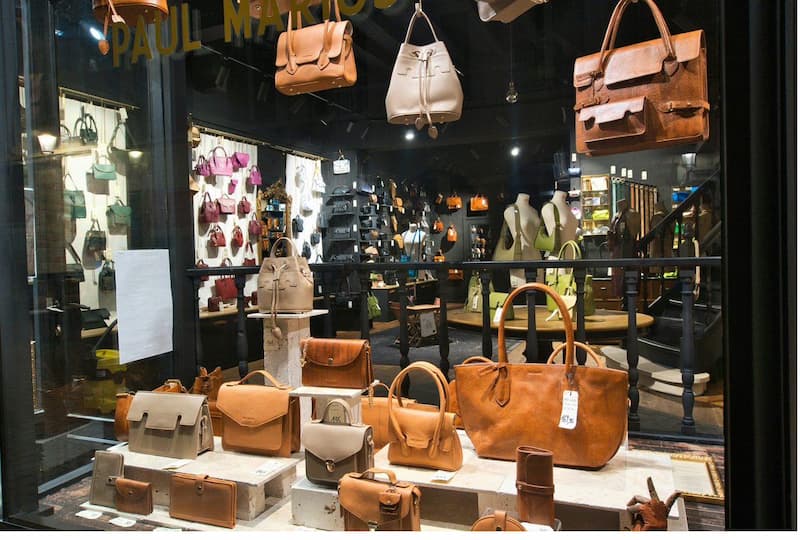
Physical retail as the margin engine. A bag in a window display converts differently than the same bag in a product photo. Touch, proximity, and the in-store experience support higher pricing and higher conversion simultaneously. Boutiques consistently achieve better margin on physical sales than on the same product sold online, because the in-store experience does the work that a product description page cannot. Two units in your window do more selling work per unit than six units on a Shopify grid.
Pop-ups as geographic testing. A temporary market presence in a new neighborhood or a new city lets you test whether a product and a price point works with a different customer base before you commit to stocking it permanently. The cost of a pop-up slot is recoverable on a small batch of well-chosen product. The cost of a wholesale order that the wrong customer base does not want is not.
Multi-channel selling is not a niche strategy. According to Shopify's 2025 platform data, over 90% of Shopify merchants connect their stores to multiple sales channels. What separates the operators who get leverage from this is whether they run those channels in sequence or in parallel. The retailers who make the model work are not running separate strategies per channel. They are running one unified strategy, using each channel for what it does best.
A concrete scenario: order 8 units of a trending bag. Place 2 in your window display. List 6 on your Shopify store. The window drives walk-in traffic and conversation. The online listings capture customers who discover the product through your social content. Six units sell in two weeks. You now have real customer data (price point, which channel drove conversion, whether repeat customers or new ones bought) before you decide whether to restock 20 or pivot to the next bag.
The Math: When Curated Sourcing Beats Wholesale
A representative scenario, for illustration, not as a prescriptive minimum or maximum. The flexibility of the model means the same logic scales up or down to whatever fits your business.
| Metric | Traditional Wholesale | Curated Drop (DTB) |
|---|---|---|
| Sourcing cost/unit | $18 (representative) | $32 (illustrative, based on our supplier network) |
| Units ordered | 50 (minimum) | 12 (your choice) |
| Total invested | $900 | $384 |
| Retail price | $36 (2x markup, competitive) | $99 (3x markup, curated scarcity) |
| Sell-through | 70% in 6 months | 83% in 4–6 weeks |
| Net profit (sold units) | ~$630 | ~$670 |
| Inventory cycle | 6 months | 4–6 weeks |
| Differentiation | Minimal | High |
On capital efficiency, the difference is structural.
Wholesale: $900 invested → $630 net profit → 70% ROI on cycle → 6-month cycle
Curated: $384 invested → $670 net profit → 174% ROI on cycle → 6-week cycle
On an annualized basis, the curated model produces multiples of the wholesale model's return on the same dollar deployed, not because the margin per unit is dramatically higher, but because the capital cycles six times faster.
The scaling logic works upward. A boutique testing a trend with 8 units, then placing a 40-unit follow-up order once customer response confirms the bet, captures both the upside of trending volume and the protection of small-batch testing. The flexibility is the asset.
All figures are illustrative and based on our sourcing network and the boutiques we work with. Actual results vary by audience fit, pricing strategy, and local market conditions.

Common Objections (And the Honest Answers)
"But I need consistency for my store identity."
The assumption here is that consistency means carrying the same suppliers season after season. It does not. Your store identity is your curatorial judgment: your ability to find what your customers want before they can name it. That identity is strengthened, not weakened, by sourcing from a broader range of trending products. Curated diversity is a stronger brand position than forced consistency. The boutique known as "the one that always has something you have not seen before" is harder to compete with than the boutique known for carrying the same four lines as everyone else who went to the same trade show.
"What if a bag does not sell?"
With a small-batch model, the worst case is significantly more contained than with a traditional wholesale order. Eight units at $32 each represents $256 in sourcing cost. The same risk on a 50-unit wholesale minimum is categorically different. Beyond that, the pre-sell mechanic (teasing the product on your social channels before placing the order) lets you measure customer interest before you commit to inventory. The downside on a curated-drop model is bounded in a way that wholesale risk is not.
"I don't have time to scout trends."
That is exactly what Find My Bag is for. You spot a bag, whether on TikTok, on a competitor's shelf, in a magazine, in your own DMs from customers asking "where can I find X", you submit the photo or link, and you receive a sourcing quote within 24 hours. The scouting is a 60-second action. The sourcing and quality verification happen on the other side.
"Wholesale gives me payment terms: Net 30 or Net 60."
This is a real structural difference. Wholesale payment terms allow boutiques to receive inventory before cash leaves the business. This model requires payment upfront. The relevant comparison is not "Net 60 vs. upfront" on identical order sizes: it is "Net 60 on $9,000 minimum order" vs. "upfront on $384 test batch." The cash-flow exposure on a small-batch test order, even paid immediately, is typically lower than the cash-flow exposure on a large wholesale order with extended terms.
"What about returns and quality issues from my customers?"
Quality control is performed in-house on every shipment before it reaches you. That does not eliminate customer returns (no sourcing model does), but it substantially reduces defective product returns, which are the category of returns that damage customer trust and erode margin simultaneously. The return rate on correctly-represented, quality-verified product is driven by fit and preference, which is your domain, not the sourcing model's.
The curated-drop model does not require a wholesale relationship, a trade show visit, or a seasonal commitment. It requires a sourcing partner who can find trending product at the quality and quantity you actually need, and ship it before the trend moves on. If you want to see what that looks like on a specific bag, submit it for a quote — that is the starting point.
And when the data from your curated drops tells you consistently which silhouette your customers reach for. That is when starting your own private-label bag brand becomes a logical next step, not a leap.
Frequently Asked Questions
What is the minimum order quantity to source a handbag through Drop That Bag?
There is no minimum order quantity. You can submit a bag and receive a sourcing quote for any quantity that fits your business: one unit to test a hunch, or a larger batch once customer interest is confirmed. For larger orders, pricing tiers reduce the per-unit cost.
How long does it take to receive inventory after I submit a bag?
After you submit and confirm the order, standard sourcing typically takes one to two weeks for delivery, based on our current supplier network. Actual timelines vary depending on the specific bag, origin, and your location. You receive the sourcing timeline as part of your 24-hour quote before committing to any order.
How does this work for a boutique that wants to pre-test a bag with customers before ordering?
Submit the bag on Day 1, receive the quote on Day 2, and use that window to tease the product on your social channels or website before placing the order. If the response from your audience is strong, you place the order with confidence. If it is weak, you have lost nothing. The pre-sell mechanic works for boutiques exactly as it does for creators. You order only what you have already validated.
Can I source a bag I saw on a competitor's Instagram or in another boutique?
Yes. Submit a photo, a link, or a screenshot. As long as the bag is not counterfeit or an unauthorized replica of a protected design, we can source it. Unbranded and original-design bags are the primary category DTB works with, not counterfeit goods.
What about returns and quality issues?
Quality control is performed in-house before every shipment. This substantially reduces defective product returns, which are the most damaging category for boutique margin and customer trust. Customer preference and fit returns depend on your store's return policy and how you present the product. That is your expertise, not something the sourcing model changes.
When should a boutique consider OEM (private label) instead of just sourcing?
Once you have run three to five curated drops and have clear data on which silhouette your customers consistently buy, the case for private-label production gets strong. OEM lets you put your name on the bag, increase your retail pricing power, and own the design rather than sourcing it. The OEM playbook covers the full process, and Start Your Bag Brand is where that conversation begins.